
The electrical cable color chart standard is an essential reference for correctly identifying conductors within electrical systems. Color coding allows technicians, installers and designers to immediately recognize the function of cables, reducing the risk of connection errors.
Understanding the electrical cable color chart regulations is therefore essential to ensure safety, efficiency and compliance with technical standards.
The regulations on electrical cable colors define the rules that establish which color should be used to identify the different conductors in electrical systems.
This coding was introduced to allow immediate identification of cable functions, simplifying the work of installing and maintaining systems.
In domestic installations, the structure is generally simpler because most installations use single-phase systems.
In industrial plants, on the other hand, the presence of three-phase systems requires a deeper knowledge of the color codes of electrical cables, which are essential to correctly distinguish the different power lines.
CEI standards precisely establish the normative electrical cable color table, defining the colors to be used to identify phase, neutral and protective conductor.
Compliance with these guidelines allows for uniformity in electrical systems and facilitates installation and maintenance operations.Specialized companies such as Caviterm also work within these technical regulations to ensure reliable solutions that comply with industry standards.
Installers and designers must correctly apply the normative electric cable color table when making installations.
This means using the prescribed colors for each conductor and maintaining consistent coding in the wiring, so that circuit identification is also clear in subsequent interventions.
Over time, the regulations on electrical wire colors have been updated to conform to European standards.
These updates introduced clearer and more standardized color schemes, improving the readability and safety of electrical wiring.
The color chart of electrical cables allows you to quickly identify the function of each conductor within the system.
Knowing electrical wire color table codes is critical to avoid connection errors and ensure proper handling of electrical circuits.
The phase conductor is the one carrying the current to the electrical load; it can be identified with colors such as brown, black or gray, used to distinguish the active lines in the system.
According to the regulations on the color chart of electrical cables, the neutral is identified by the color blue. This conductor allows current to flow back to the power source and plays a key role in the proper functioning of electrical circuits.
The protective conductor, known as ground, is identified by the yellow-green combination.
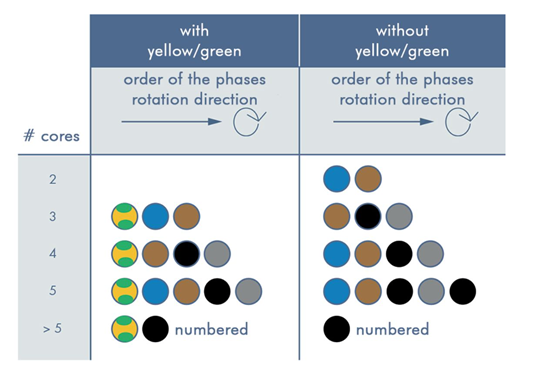
The normative electric cable color table applies to both single-phase and three-phase systems, with some differences related to circuit structure. Knowing these configurations makes it possible to design and install safe and correctly identifiable electrical systems.
In single-phase systems, there are three main conductors: phase, neutral and ground.
The color chart of electrical cables according to the standard generally assigns brown to phase, blue to neutral and yellow-green to earth, ensuring clear identification of connections.
In three-phase systems, power cable color table codes call for the use of threedistinct colors to identify the different phases: brown, black and gray. This coding makes it easy to distinguish active lines and to properly manage power distribution systems.
To correctly interpret a color chart of electrical cables, it is necessary to know the role associated with each color.
The normative electrical cable color chart allows for quick identification of phase, neutral and ground, making installation and maintenance safer and faster.
Compliance with the standard electric cable color table is essential to ensure the safety of installations and prevent connection errors.
Clear color coding enables technicians to work more accurately and reduce the risk of electrical accidents, contributing to the overall reliability of electrical systems.
Yellow-green.
Blue.
Brown, black or gray.
Yes, CEI technical standards require compliance with color codes in wiring.
The following may occur safety hazards and plant compliance issues.
Analyzing wiring diagrams, cable markings, and connection configuration.

